Loading content...
FG secures $2bn CNG investment, 120,000 vehicles converted
The Federal Government has disclosed that more than $2bn has been secured in private-sector investment for the development of Compressed Natural Gas infrastructure and the wider CNG value chain.
The government also said more than 90 CNG refuelling stations had been established across the country as part of efforts to expand the use of the cheaper and cleaner alternative to conventional transport fuels.
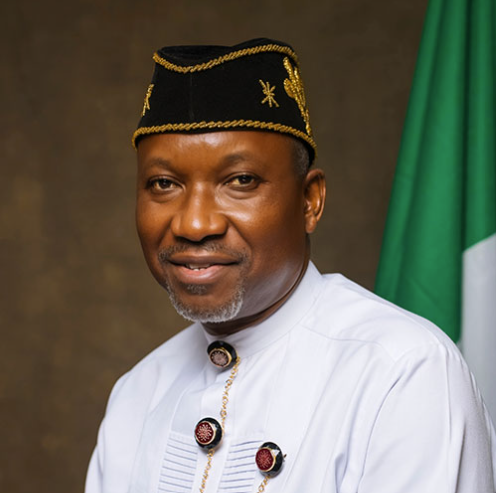
The Minister of State for Petroleum Resources (Gas), Ekperikpe Ekpo, disclosed this in a statement issued on Tuesday by his spokesman, Louis Ibah.
Ekpo said the investment was facilitated under the Presidential Initiative on Compressed Natural Gas, launched in 2023, and had supported the expansion of refuelling infrastructure, vehicle conversion centres, technical capacity and the wider ecosystem required for nationwide adoption.
According to the minister, more than 120,000 vehicles have been converted to CNG through a network of over 400 certified conversion centres and more than 90 refuelling stations.
He said, “Since the launch of the Presidential Initiative on Compressed Natural Gas in 2023, the Federal Government, working with relevant stakeholders, has facilitated significant private-sector investment in the CNG value chain, with more than $2bn secured for CNG infrastructure and value-chain development.
“This investment has supported the rapid expansion of refuelling infrastructure, vehicle conversion centres, technical capacity and the wider ecosystem required for nationwide adoption. More than 120,000 vehicles have been converted to CNG through a network of over 400 certified conversion centres and more than 90 refuelling stations.”
The minister added that the programme had trained over 7,700 automotive technicians and created more than 10,000 direct and indirect jobs, while procuring and deploying 655 CNG buses and 5,123 CNG tricycles.
These assets, he said, complemented the thousands of privately converted vehicles operating across Nigeria’s public and commercial transport networks. Ekpo said the developments showed that CNG was no longer merely a future alternative, but an increasingly viable fuel already in use across the country.
He said the growing number of Nigerians adopting CNG provided strong validation of the programme, noting that commercial transport operators, private vehicle owners and fleet managers were reporting significant fuel-cost savings and improved profitability.
The minister added that commuters using CNG-powered buses were also benefiting from lower fares. He said the objective of the programme was not simply to increase the number of CNG vehicles and refuelling stations, but to ensure that fuel savings translated into lower transportation and logistics costs.
“The objective is not simply to increase the number of CNG vehicles and refuelling stations, but to translate fuel savings into lower transportation and logistics costs, ease the cost of living and improve economic productivity,” Ekpo stated.
To sustain the momentum, he said the ministry was working with Pi-CNG, the Midstream and Downstream Gas Infrastructure Fund, state governments, transport unions, operators, investors and other stakeholders to expand refuelling and conversion infrastructure.
He said the stakeholders were also working to develop dedicated CNG corridors and extend access to underserved communities. Ekpo commended President Bola Tinubu’s recent directive for an additional 500 CNG refuelling stations, saying the move would bring the planned national network to 1,000 stations.
He said the initiative would further expand access to CNG and accelerate its adoption across the country. The minister also commended state governors who have embraced the programme through investments and partnerships, while urging those yet to do so to key into the initiative in the interest of Nigerians and the commuting public.
He assured that the Federal Government would continue to work with investors and industry stakeholders to accelerate infrastructure deployment, deepen domestic gas utilisation and ensure that the benefits of the CNG programme reached Nigerians at the grassroots.