Loading content...
Nigeria’s Decade of Gas Programme Records Significant Milestones
Nigeria’s Decade of Gas Programme has recorded measurable progress over the past two years, marked by increased gas production, renewed investor confidence, and accelerated infrastructure development — reinforcing the nation’s pathway towards becoming a gas-powered economy by 2030.
Recent data from the Decade of Gas Office indicate that national gas production increased from 6.8 billion cubic feet per day (bcfd) in 2023 to 7.5 bcfd in 2025. Within the same period, domestic gas supply surpassed the 2 bcfd threshold for the first time in Nigeria’s history, reflecting sustained efforts to prioritise local utilisation.
In addition, over 1 bcfd of incremental gas supply has been unlocked through a combination of Final Investment Decisions (FIDs) and firm gas supply agreements, while export gas volumes have rebounded to 2021 levels.
The Decade of Gas initiative was formally launched on March 29, 2021, to drive economic growth and position gas as the transition fuel for Nigeria’s energy future. While early implementation faced scepticism, particularly regarding readiness to fully harness Nigeria’s vast gas resources, the programme has gained strong momentum in recent years.
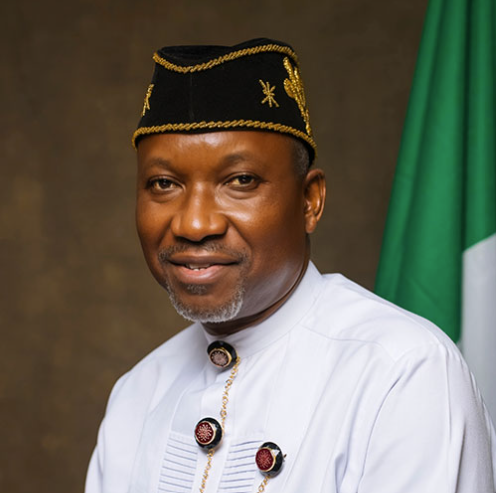
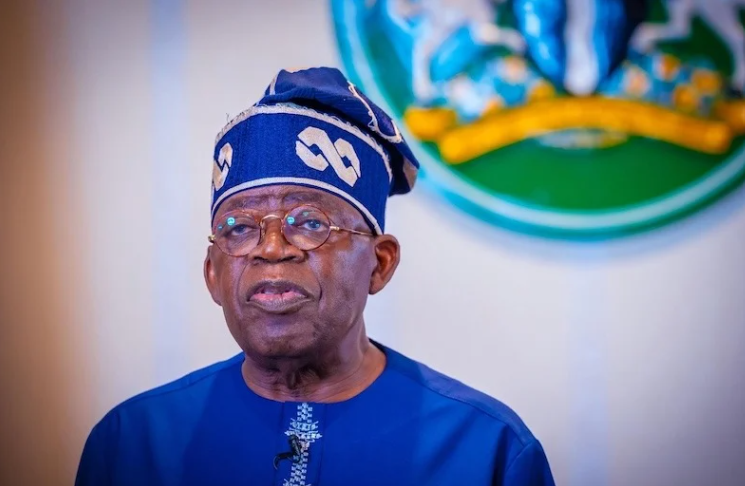
Under the current administration of President Bola Ahmed Tinubu, and with strengthened coordination by the Ministry of Petroleum Resources (Gas), the programme has recorded notable advancements across the gas value chain. Since the assumption of office by the Minister of State for Petroleum Resources (Gas), Rt. Hon. Ekperikpe Ekpo, several strategic milestones have been achieved.
Investor confidence in the gas-to-power segment has improved following presidential approval for the settlement of approximately ₦185 billion (over $500 million) in longstanding debts owed to gas producers by the power sector. Upstream investment has also accelerated, with three Final Investment Decisions — Iseni, Ubeta, and Hi — reached between 2023 and 2025, mobilising over $2 billion towards a long-term investment target of $30 billion by 2030.
Nigeria has further strengthened its global gas leadership through increased participation within the Gas Exporting Countries Forum (GECF), including securing the presidency of the GECF Ministerial Meeting in 2026, the Secretary-General position, and representation by the Nigerian Midstream and Downstream Petroleum Regulatory Authority (NMDPRA) on the forum’s executive board.
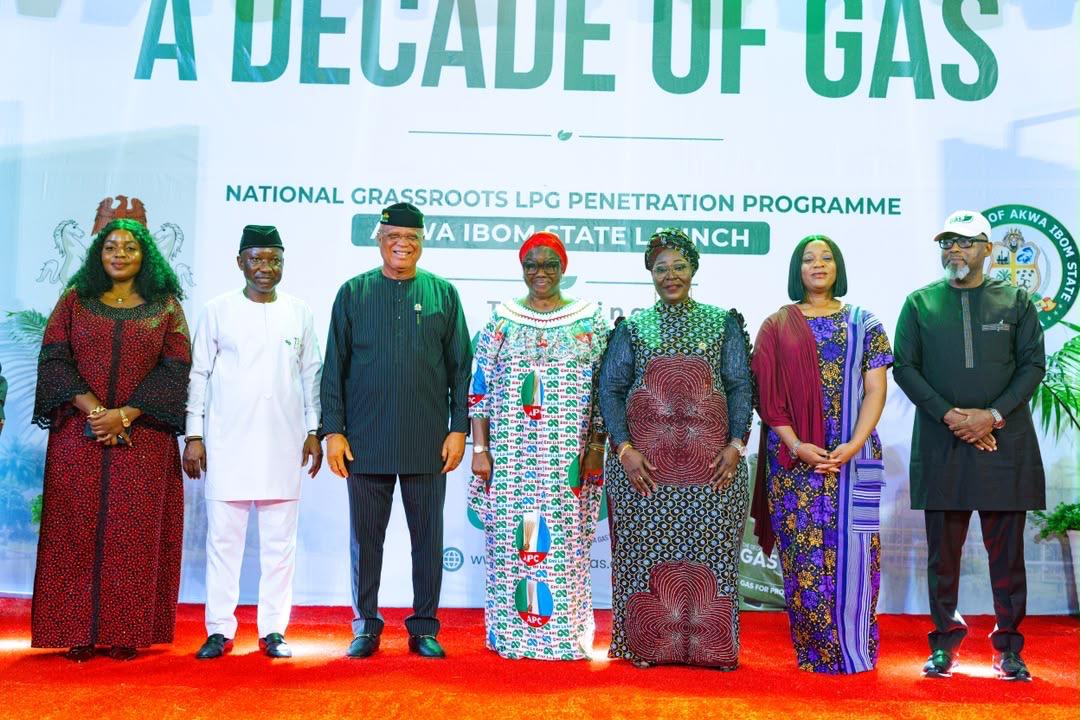
On the domestic front, reforms in 2025 led to a reduction in the domestic gas base price from $2.42/MMBtu to $2.13/MMBtu, balancing affordability with sustained investment. A ministerial directive mandating increased liquefied petroleum gas (LPG) production was issued to deepen household access, alongside the launch of two pilot export-redirection programmes under the LPG grassroots penetration initiative.
Significant progress has also been recorded under the Midstream and Downstream Gas Infrastructure Fund (MDGIF), with governing council approval granted for the financing of over 20 critical gas infrastructure projects valued at more than ₦287 billion. Over 50 per cent of the approved funds have been disbursed, with multiple projects currently at various stages of construction.
Infrastructure delivery by the Nigerian National Petroleum Company Limited (NNPCL) has continued to advance, including the completion of river crossing and mechanical welding works on the Ajaokuta–Kaduna–Kano (AKK) gas pipeline. The Escravos–Lagos Pipeline System (ELPS) maintained over 90 per cent availability in 2025, supplying gas to key industrial users, while completion of the OB3 pipeline crossing is projected for 2026.
Looking ahead, the identification of over 50 gas utilisation projects across the midstream and downstream segments is expected to generate more than four million jobs by 2030, further underscoring the Decade of Gas Programme’s role in driving economic growth, energy security, and national development.